Leather Bomber Jackets for Men
The leather bomber jacket started as a survival tool. It was built for open cockpits, no insulation, pilots freezing at 20,000 feet, where a jacket wasn't a fashion but equipment. Over a century later, the world has changed, but the silhouette has barely changed. The good ones still feel like they were made to last longer than you'll ever need them to.
At Gleam Hide, we make bomber jackets from full-grain sheepskin leather. Built to be worn hard and kept for years, not swapped out every other season.
Where the bomber jacket came from
The first flight leather jackets appeared in 1917. Open-air cockpits meant pilots needed real protection, and that protection was provided using horsehide, sealskin, and and fur lining. These hides weren't chosen for their textures, but to safeguard lives against blistering 100-mph cold winds.
By the 1930s, cockpits got smaller and jackets got slimmer. The A-2 is what WWII Air Corps pilots actually wore during these times, featuring a zip front, high collar, and smooth leather. The B3 bomber leather jackets came around the same time, full sheepskin, built for bombers flying above 25,000 feet, where the cold could cause hypothermia. The G-1 arrived for the Navy, having a fur collar and a bi-swing back. By the 1940s, the MA-1 showed up: lighter, with a knit collar replacing fur because fur got in the way of parachute harnesses.
Every silhouette in the Gleam Hide collection traces back to one of these originals.
How our bomber jackets are built
Most bomber leather jackets on the market are built to hit a price point. Split or bonded leather, lightweight zippers, thin synthetic lining. They look pretty decent for a season. Then the leather cracks at the collar, the zip pulls from the tape, and here you come back shopping.
But Gleam Hide jackets use full-grain leather on the shell, the surface layer of the hide that hasn't been sanded. The natural grain marks and texture variations aren't flaws; that's what real leather looks like before being processed in factories. Over years of wear, it builds a patina no pre-treatment can replicate.
- Leather shell: full-grain sheepskin. No split leather, no bonded leather.
- Lining: Cotton or polyester lining on all the cuts other than B3's.
- Hardware: YKK zippers, solid metal snap closures. Cheap zippers are the first failure point on an otherwise decent jacket.
- Stitching: double-stitched at the collar, armholes, and pocket edges, the spots that take the most stress.
The collection
B3 sheepskin leather bomber jacket
Full sheepskin shell, heavy wool interior, wide shearling collar with leather cinch straps. The warmest jacket in the collection. If you live somewhere that gets genuinely cold, not just cool, this is a collection you must check out once.
Vintage and distressed
Pre-distressed leather bomber jacket with a worn-in finish from day one. The kind of character that usually takes a few years of regular wear to develop. Available across various styles.
Black or brown
Black leather bomber jacket
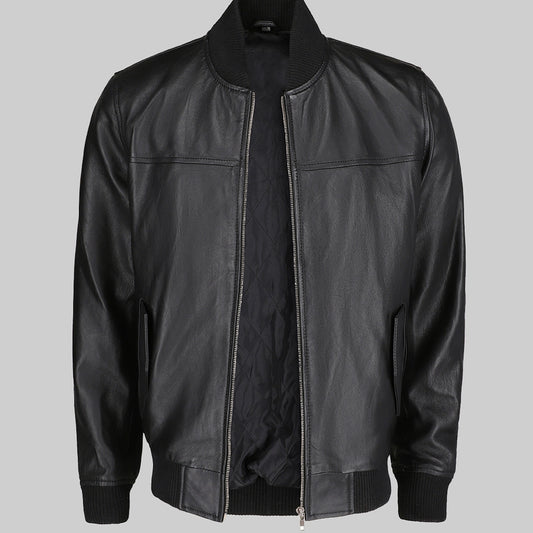
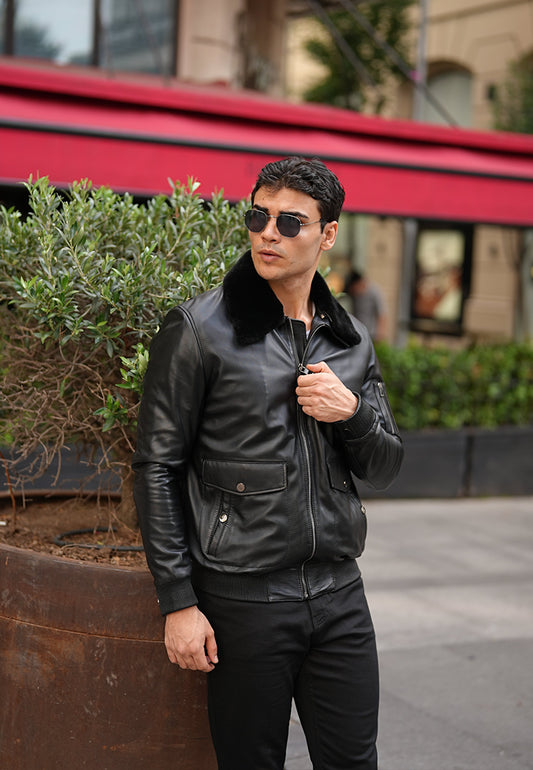
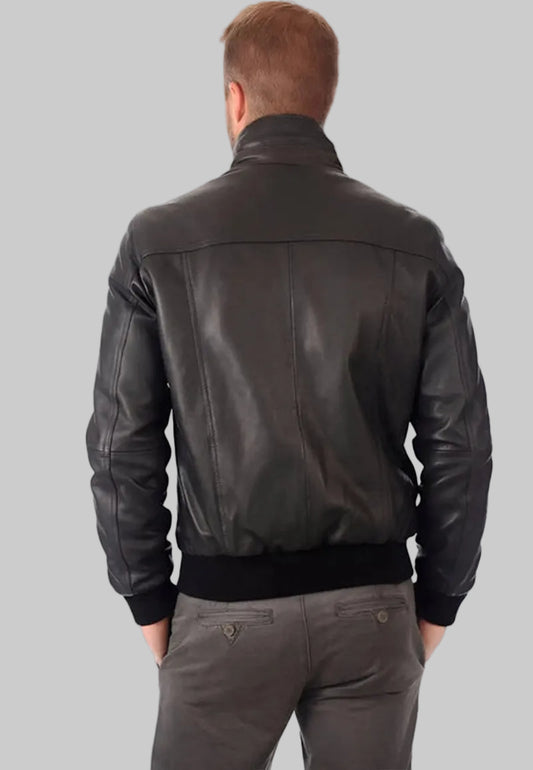
The default for a reason. Pairs with everything: dark denim, grey chinos, black trousers. If you own one leather jacket and want it to work across most situations, a black bomber jacket is the most reliable choice.
Brown leather bomber jacket
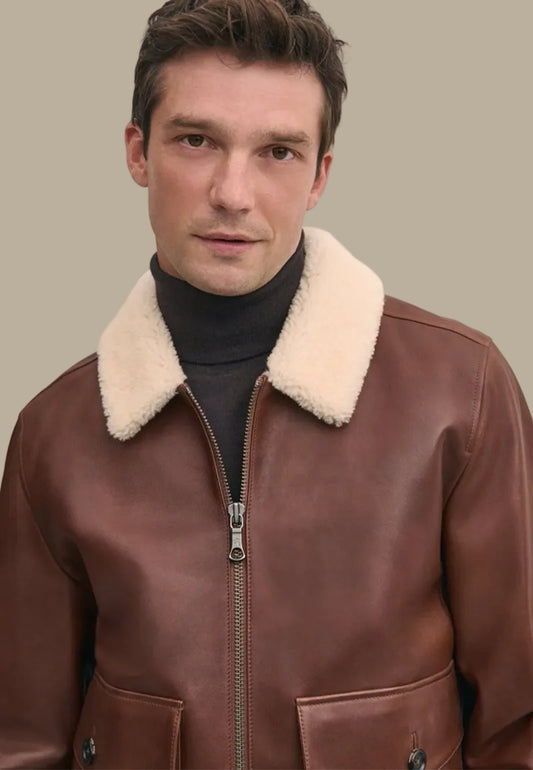
More distinctive, more heritage. Brown leather jacket develops better patina over time, the tones deepen and shift in a way that makes each jacket look different after a few years. The B-3 bomber jacket, G-1, and A-2 jacket styles are almost always brown because that's how the originals came. If you already own something black, go brown.
How to wear one
White tee and dark jeans
A black bomber jacket over a white tee and dark-wash jeans is already a complete package, and you need nothing more. But the addition of leather boots can level up the entire game.
Hoodie underneath
A fitted hoodie under an MA-1 or A-2 leather jacket looks deliberate. A baggy one looks like two outer layers stacked. If it fits, it works.
Flannel and chinos
A brown G-1 leather jacket over a flannel shirt and slim chinos works for a lot of occasions. More dressed than a hoodie, less formal than a blazer.
Looking after it
Full-grain leather doesn't crack on its own; it cracks when it dries out. Most problems come from neglect, not use.
- Brush after wearing: a soft brush takes surface dirt off before it works into the grain.
- Condition 2–3 times a year: apply with a cloth, let it absorb, wipe off excess.
- If it gets wet: blot dry, air dry at room temperature, not near a heater. Condition once fully dry.
- Storage: wide padded hanger, cool dry space, no direct sunlight. Never store in a plastic bag.
- Breaking it in: wear it. Roll the jacket firmly in your hands if you want to speed things up.
Frequently asked questions
What is the warmest bomber jacket you make?
The B-3. Full sheepskin shell, heavy wool interior, wide shearling collar. Built for unheated aircraft above 25,000 feet. Nothing else in the collection comes close.
Will the leather crack over time?
Only if you neglect its maintenance, condition it two or three times a year, and it won't. A well-maintained full-grain jacket can literally last 20–30 years.
How should it fit?
Shoulder seams at the natural shoulder. Sleeves to the wrist bone. Enough room in the body for a mid-weight sweater without pulling across the back. When in doubt, size up.
How long will it last?
20 to 30 years with basic care instructions as discussed above. The leather improves over time. Jackets from the 1970s are still in daily use. That's what we build too.